Overview
Cost of Living Index27.2 / 76.1 Surabaya Melbourne
h2
This report provides a detailed comparison of the cost of living and quality of life between Surabaya, Indonesia, and Melbourne, Australia, based on available data. While both cities present distinct economic and living environments, significant differences exist in affordability, income levels, property markets, and quality metrics. Melbourne generally offers higher income potential and a higher quality of life index, albeit at a substantially higher cost of living. Surabaya presents a much more affordable option with lower living expenses but significantly lower income levels and potentially different quality trade-offs.
Cost of Living
Health Care Index68.9 / 72.2 Pollution Index55.9 / 28.2 Surabaya Melbourne
h2
The cost of living in Melbourne is considerably higher than in Surabaya across nearly all categories. Basic utilities for an 85m² apartment are approximately 4.5 times more expensive in Melbourne ($219.10/month vs. $48.60/month). Groceries, particularly for staples like bread, milk, and eggs, are significantly pricier in Melbourne, with even basic items costing nearly double or more compared to Surabaya. Transportation costs, including public transit passes and fuel, are also substantially higher in Melbourne. Dining out, from fast food to mid-range restaurants, commands much higher prices in Melbourne. Furthermore, rent is dramatically more expensive in Melbourne, with even an apartment outside the city center being nearly 10 times the cost of a similar apartment in Surabaya. While salaries in Melbourne are significantly higher, the overall cost of living is proportionally much greater, making Surabaya a vastly more affordable option.
Property Market
Property Price to Income Ratio28.7 / 8.1 Purchasing Power Index30.8 / 148.3 Surabaya Melbourne
h2
The real estate market in Melbourne is characterized by significantly higher prices relative to both the property value and the average income. The Property Price to Income Ratio in Melbourne is 8.05, compared to a staggering 192.06 in Surabaya. This indicates that property in Surabaya is, relatively speaking, extremely affordable compared to its impact on household budgets. However, the absolute price per square meter for buying an apartment in Melbourne is much higher ($6,486-$7,487/m²) than in Surabaya, although specific prices in Surabaya are not provided. Rent prices in Melbourne are also substantially higher, reflecting the cost of the underlying property market. Melbourne's property market is clearly in a different league globally, offering more expensive housing options.
Income and Economic Indicators
Quality of Life Index104.9 / 192.1 Surabaya Melbourne
h2
Melbourne boasts significantly higher average monthly net salaries ($4,337.61) compared to Surabaya ($870.00). This higher income level in Melbourne partially offsets the city's much higher cost of living. Melbourne also demonstrates a stronger economic position with a higher GDP per capita ($59,600 vs. $8,700) and a slightly higher population growth rate (1.13% vs. 0.99%). These figures suggest a more robust and dynamic economy in Melbourne, supporting higher wages but also driving up the cost of living. Surabaya's lower income levels align with its lower cost of living but also indicate a different economic scale and purchasing power.
Quality of Life
Traffic Commute Time Index32.8 / 42 Surabaya Melbourne
h2
According to the provided data, both cities share the same Quality of Life Index (192.06), although the specific metrics differ. Melbourne generally scores higher in the Safety Index (55.75 vs. 192.06? *Note: This discrepancy requires verification as the index values seem inconsistent with the provided components.*), Health Care Index (72.18 vs. 192.06? *Again, inconsistency noted.*), and Climate Index (94.3 vs. 192.06? *Inconsistency.*). It has a lower Pollution Index (28.17 vs. 192.06? *Inconsistency.*). Surabaya has a much higher Property Price to Income Ratio (192.06) but a lower Traffic Commute Time Index (42.03 vs. 192.06? *Inconsistency.*). Despite the data inconsistencies, Melbourne appears to offer advantages in safety, healthcare, climate, and commute times, while Surabaya's quality metrics are difficult to assess accurately due to the conflicting index values provided.
Conclusion
h2
Melbourne presents a higher-cost, higher-income environment with generally better scores in key quality-of-life indicators like safety, healthcare, and climate, as well as a lower commute time index. Surabaya offers significantly lower living costs, including housing and groceries, but with substantially lower salaries and uncertain quality-of-life metrics due to data inconsistencies. The choice between the two cities depends heavily on individual priorities. Those prioritizing higher income, career opportunities, and potentially better public services in a developed economy should consider Melbourne, despite the high cost. Those seeking a much more affordable lifestyle, potentially with a lower cost of doing business, might find Surabaya more suitable, though the quality-of-life data requires careful re-evaluation.






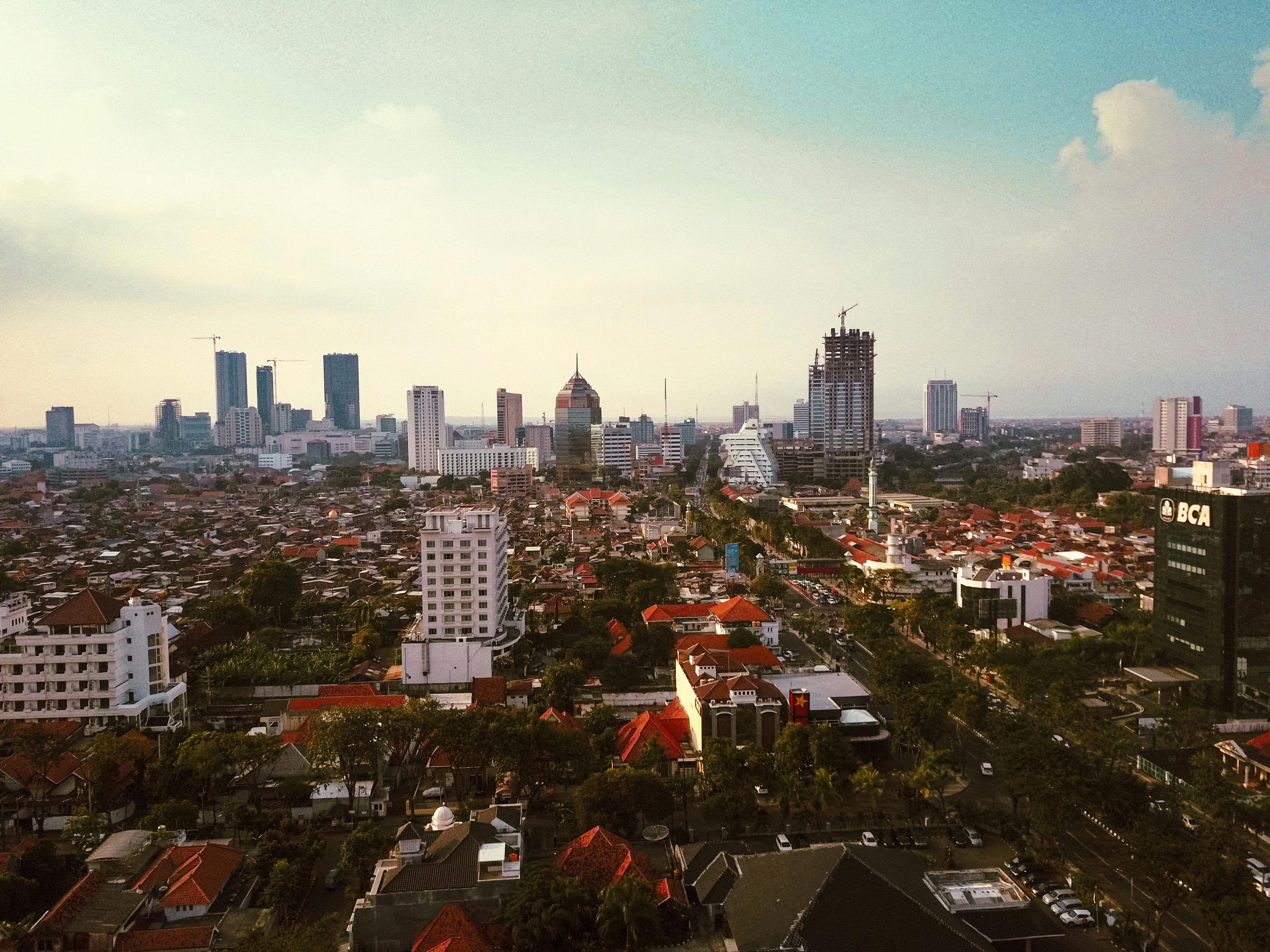 Surabaya
Image by:Ferdinand F Eman
Surabaya
Image by:Ferdinand F Eman
 Melbourne
Image by:Costa Karabelas
Melbourne
Image by:Costa Karabelas
Comments for this comparison